


If you’re doing “all the right things” for your hormones—eating well, managing stress, supporting your gut—and still feel off, heavy metals might be the uninvited guests nobody warned you about.
They’re not trendy. They don’t get much traction on Instagram. And yet, heavy metals are one of the most under-discussed, over-impactful disruptors of hormonal health I see clinically—especially in women who are already health-conscious.
This isn’t about panic or detox obsession. It’s about understanding why your hormones might feel stubborn, unpredictable, or just plain exhausted—and what to do next.
Let’s break it down.
This post contains affiliate links meaning I make a small commission at no extra cost to you. Thank you for supporting the work of Lisa Smith Wellness and the Pretty Well Podcast!

Hormones 101 (Why Balance Is Everything)
Hormones are chemical messengers—tiny but mighty. They travel through your bloodstream, delivering instructions that regulate:
- Metabolism
- Energy
- Mood
- Sleep
- Appetite
- Reproductive health
- Stress response
- Blood sugar
They work in feedback loops, meaning one hormone is constantly responding to another. Think orchestra, not soloist. When everything is in tune, the system hums. When one section is off? Chaos.
Hormonal “imbalance” doesn’t usually mean one hormone is wildly wrong. More often, it’s that signals are getting scrambled—messages aren’t sent, received, or interpreted correctly.
And this is exactly where heavy metals enter the chat.
What Are Heavy Metals (and Why You Can’t Avoid Them Entirely)?
Heavy metals are naturally occurring elements that, in excess, become toxic to human biology. The most relevant ones for hormonal health include:
- Mercury
- Lead
- Cadmium
- Arsenic
- Nickel
Here’s the uncomfortable truth: you don’t have to be doing anything “wrong” to be exposed.
Heavy metals show up in:
- Food (especially certain fish, rice, and conventionally grown produce)
- Drinking water
- Air pollution
- Soil
- Personal care products
- Cosmetics
- Cookware
- Old pipes, paint, and building materials
Modern life equals low-grade, chronic exposure. The issue isn’t exposure alone—it’s accumulation plus impaired detox capacity.
Why Heavy Metals Are a Hormonal Nightmare
Heavy metals don’t just float through the body politely. They interfere with hormone function in three big, biologically disruptive ways.
1. They Accumulate in Hormone-Producing Organs
Heavy metals are sticky. Once they’re in, they tend to lodge themselves in tissues like:
- Thyroid
- Ovaries
- Testes
- Adrenals
- Pituitary
- Brain
This storage creates chronic, low-grade inflammation in organs that are supposed to be precise and responsive.
Translation: hormone production becomes noisy, erratic, or sluggish.
I often see this in people with “borderline” labs who feel awful but are told everything looks fine. The tissue environment matters, not just the bloodwork.
2. They Mimic Hormones (and Confuse Receptors)
Some heavy metals act as endocrine disruptors, meaning they can mimic hormones—especially estrogen—and bind to hormone receptors.
The problem?
- They don’t behave like real hormones
- They block actual hormones from doing their job
- They distort feedback signals
So your body thinks estrogen is present… but it’s not functioning correctly. Cue symptoms like:
- PMS
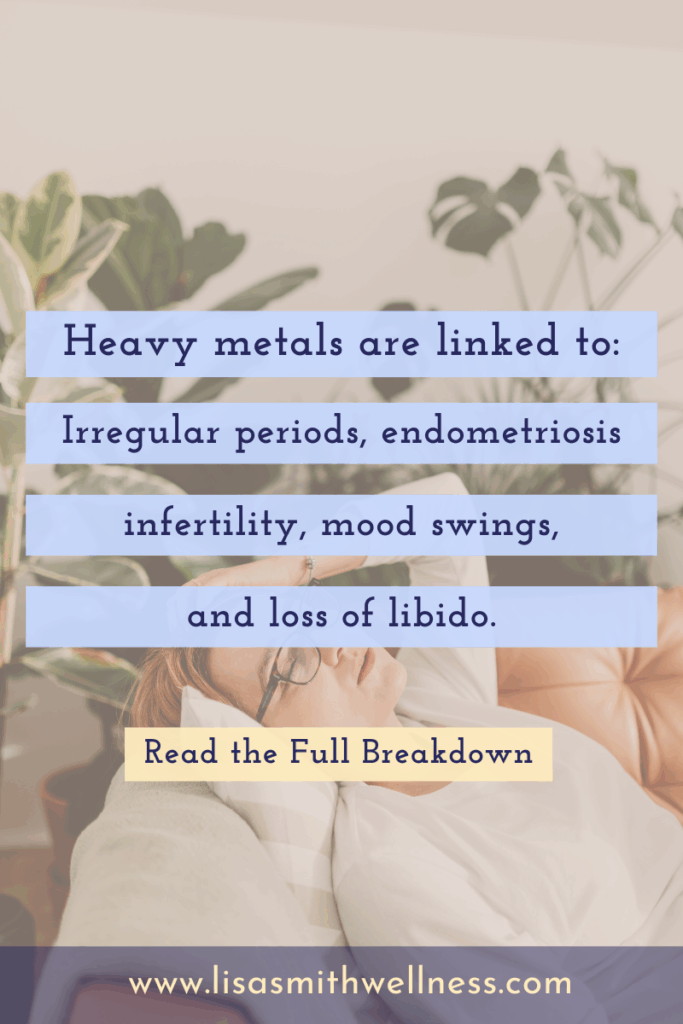
- Heavy or irregular periods
- Mood swings
- Estrogen dominance patterns
- Low libido
- Breast tenderness
This isn’t about “too much estrogen” in the simplistic sense—it’s about bad signaling.
3. They Disable the Enzymes That Activate Hormones
Hormones don’t work unless they’re properly activated and converted.
Heavy metals can inhibit enzymes responsible for:
- Converting T4 to active T3 (thyroid)
- Balancing estrogen metabolites
- Clearing cortisol
- Supporting insulin signaling
This is why someone can have “normal” hormone levels and still feel completely dysregulated. The machinery is jammed.
How Heavy Metals Impact Specific Hormone Systems
Let’s get concrete.
Thyroid Hormones: The Metabolic Control Center
The thyroid is especially vulnerable.
Mercury, cadmium, and nickel can:
- Interfere with iodine uptake
- Disrupt thyroid hormone production
- Block conversion of T4 → T3
- Trigger autoimmune activity
Mercury, in particular, has been associated with Hashimoto’s thyroiditis, likely due to immune activation and molecular mimicry.
Clinically, this shows up as:
- Fatigue
- Cold intolerance
- Weight changes
- Brain fog
- Hair thinning
- Exercise intolerance
And yes—this can happen even when TSH is “fine.”
Sex Hormones: Estrogen, Progesterone & Testosterone
Heavy metals don’t discriminate.
They can:
- Mimic estrogen
- Suppress progesterone
- Disrupt testosterone production
- Alter ovarian signaling
- Impair sperm quality
Mercury, lead, and cadmium have been associated with:
- Menstrual irregularity
- Endometriosis patterns
- Fertility challenges
- Mood instability
- Libido changes
This is one reason hormone symptoms can feel cyclical, stubborn, or resistant to standard support.
Stress Hormones: Cortisol & the Adrenal Axis
Cadmium exposure has been linked to elevated cortisol levels.
Chronic cortisol elevation:
- Promotes belly fat
- Disrupts blood sugar
- Impairs thyroid conversion
- Suppresses progesterone
- Increases anxiety and sleep disruption
Heavy metals also interfere with adrenaline and noradrenaline signaling—making stress responses feel exaggerated or unpredictable.
Ever feel “tired but wired”? This is one possible contributor.
Insulin & Blood Sugar Regulation
Cadmium and arsenic exposure have been linked to:
- Insulin resistance
- Impaired glucose tolerance
- Increased risk of type 2 diabetes
Blood sugar instability feeds hormonal chaos—affecting cortisol, sex hormones, thyroid, and appetite regulation.
This is why hormonal health can’t be separated from metabolic health. They’re the same conversation.
Why This Often Gets Missed
Heavy metals don’t cause immediate, dramatic symptoms. They cause slow dysfunction.
They:
- Accumulate quietly
- Stress detox pathways
- Amplify other vulnerabilities
- Make “normal” stress feel unbearable
- Turn minor imbalances into chronic ones
And because symptoms are nonspecific—fatigue, mood changes, bloating, weight issues—they’re often blamed on stress, age, or “just hormones.”
Yes… but why are the hormones struggling?
Reducing Exposure Without Going Full Bubble-Wrap
This is where we stay grounded.
You do not need to live in fear or buy every detox product on the internet. You do need to reduce unnecessary exposure and support your body’s natural elimination pathways.
Be Strategic About Inputs
- Choose organic when possible—especially for high-exposure foods
- Be mindful of fish choices (avoid species highest in mercury: Shark, Swordfish, King Mackerel, Tilefish (Gulf of Mexico), Marlin, Orange Roughy, and Tuna)
- Avoid cookware that leaches metals
- Choose cleaner personal care and cosmetics (check out best options on ewg.org/skindeep/)
- Be cautious with imported supplements and spices
Filter What Comes In
- Use a quality water filter (this matters more than people realize). I like Berkey Water Filters and Epic Brand
- Improve indoor air quality if possible
Consider Testing (When It Makes Sense)
If symptoms are persistent and unexplained:
- Hair mineral analysis
- Heavy metal panels
Testing isn’t about labels—it’s about clarity.
Support Detox Capacity (Gently)
Your body already detoxes—your job is to not overwhelm it.
Foundational support includes:
- Adequate protein
- Fiber-rich whole foods
- Micronutrient sufficiency
- Liver and gut support – dandelion root tea, milk thistle, marshmallow root, slippery elm, and aloe
- Regular bowel movements (glamorous? no. essential? extremely.)
We’ll go deeper into nutrition-based strategies in another blog—but you can start by reducing exposure and stabilizing the basics.
The Takeaway
Heavy metals don’t hijack hormones overnight. They erode balance slowly, quietly, and cumulatively.
If your hormones feel reactive, inconsistent, or resistant to support, it’s worth asking whether environmental load—not effort—is the missing piece.
This isn’t about what you’re doing wrong. It’s about understanding the terrain your hormones are operating in.
Awareness is step one. Smart, steady action is step two.
If this article made you rethink what “healthy” actually means in a modern world full of invisible exposures, you’ll love the conversations happening on the Pretty Well Podcast— where we talk about what actually moves the needle without turning health into a full-time job.
And if you’re ready to go deeper and integrate hormone health, brain function, metabolism, and confidence into one cohesive strategy, my six-week signature course Brains & Beauty is where we connect the dots—clearly, practically, and without making it complicated.
No extremes. No fear. Just smarter alignment—and results that finally make sense.


+ view comments . . .